
Nobody cares how much you know, until they know how much you care. - Theodore Roosevelt
As sales people our past success over several decades has been driven by data - data in the form of what we KNEW. Our success in “selling” was once based on the information that we had in our heads, the people that we knew, the contacts that we had, and the resources that we knew how to deploy.
Unfortunately, today significant portions of what once made us winners no longer matter, and many of us still can’t get over the ways of the past.
In a recent blog, a friend and fellow sales fanatic, Dave Brock wrote about how poorly many sales people today prospect for clients. Check out his thoughts, they are great. I see the same thing today from EVERY single call and email that I get from salespeople who are wanting a piece of my time.
The message starts like this:
“Mitchell…”
(We can stop right here because clearly my name was picked out of some database somewhere. The only person ever to call me by my full name was my Mother, when I was in trouble.)
“Mitchell, my name is Bob Blah and I would really like to have just 10 minutes of your time to tell you all about my blah, blah, blah. We are number one in blah, blah, blah. And today we serve 159 of the Fortune 500 companies. Our blah, blah, blah, will help you sell more and solve all of your problems.”
I actually do not pick up my office phone any longer because these calls come all day, every day. It’s sad. If just once, one of these hard working folks would call up and demonstrate that they actually cared about what was important to me, I would be delighted to call them back. But in the last decade that has never happened. Not even once.
To connect with the people in our lives, while selling or not, we have to CARE, and we have care about THEM.
Our understanding of what is important to THEM, what their challenges are, and how we can help, must come before we ever get into a discussion about our products or services or anything to do with us.
Our clients will care about what we have to say, ONLY when we clearly demonstrate that we care about them FIRST. And it must be in that order. And it must be genuine and sincere. No games, no pitches, no opening and closing strategies, no handling of objections, no manipulation, no SELLING!
Start with caring about them as people, not them as a part of a company. Do your homework about their world. Understand what you can about their issues in their company, their challenges in their industry, the risks that they face daily in innovation… And keep seeking to understand, because you care. Turn the understanding and caring around to focus on the person that you are serving.
You will find that those people that you care enough to serve well from their perspective will in fact care a great deal about what YOU have to say, in time. And from there the caring and information sharing explodes.
Your clients care because you care. You first!
Once upon a time our value as sales people was information. It actually still is, but the new reality is that to get to the point in a client relationship where your information is again valuable, you must enter into that relationship from the perspective of listening and diagnosing first, extensively, before you prescribe.
Sounds easy, but most sales people that I interact with today are still pushing their stuff on me before they have ever stopped to understand me. Too bad. Their loss, and our gain, since we know the secret… CARE about the people who you serve.
Irregular and irreverent rants and ravings from a SALES FANATIC.
We have learned over years of working around the world in every country where commerce exists that the meaning of words often times have huge variations. What I think I am saying can sometimes most certainly NOT be what my listener hears. And this does not even have to be an issue of local language versus English. Native English speakers can be just as confusing to each other depending on where they are from.
A good friend, Tom Freese, the author of Question Based Selling taught our leadership team that, “If it is worth saying, it is worth explaining”.
In my last blog I stated that we have to start with a shift in mindset before we can shift methodologies. This is key to any changes that you want to actually make a part of the culture of an organization, or that you want to make as a human being, for that matter.
My starting premise for shifting the mindset of the sales professional is reframing how they see themselves and developing a clear understanding of why they “sell”. The premise that sticks is an emotional one, not a logical one. We are first, emotional beings, and those embodiments are the most powerful of motivators.
So once again, my view of how to reframe the sales professional’s thinking about why we sell is the mindset shift that says this:
Our objective is to make a difference with the people who we serve.
Here is where Tom Freese comes in. Every word in that phrase is there for a reason, is very specific in nature and communicates something powerful about how and why we do what we do. Let me explain.
‘To make’ is a very strong verb. Action oriented and planned, created and intentional. It is not an accident or a passive thing. It is doable and seeable, and we guide it.
The difference is defined by the other person you are working with; it is something unique and unusual. This difference has a major impact on them and those that THEY serve. It is not something that anyone else will or can likely do, primarily because it was created together with YOU and that will hold a bond that will not be violated.
(Allow me to interject a practical point here. We are working with clients and our end objective is to serve them the way we know best. This always means that our best service is delivered by serving our client with our best products or services. There is always a pragmatic side to our serving. And that’s OK! It keeps us whole and well and able to serve others even more.)
Now, back to the phrase…
‘With’ is a huge little word here. This means that the creation and delivery of our “difference” is not done on our own and then served up for analysis. It is conceived, developed, finalized and delivered WITH the person that you are working with. With them, on things that matter to them. This is not done FOR them; it is done WITH them, from beginning to end, and beyond.
We are working with people, not companies, and not even clients, really. We are working with people and all of their challenges, both professional and personal. This is as much about personal wins for them as it is for helping their jobs and their company in any of the BIG3 types of help provided (help their company grow revenue, help their company reduce overall costs, or help their company manage risks). However, this is not about relationships as much as it is about understanding. This means we do lots of diagnosis and exploration, long before we ever get to the prescription side.
To serve is an interesting and unique perspective. Here I mean a combination of things as defined in many dictionaries. Serve – to do a job or perform duties for a person or organization, to help achieve something, to provide a person with something useful, helping a client choose what they need. I prefer the servant leadership perspective that Robert Greenleaf has in his book, The Servant as Leader, where he states that to serve is “to make sure that other people’s highest priority needs are being met.”
So there we have it - a simple yet compelling and powerful reframe of thinking for starting the mindset shift for the sales professional: to make a difference with the people who we serve.
This is just the starting point. Following the mindset shift comes the methodology shift and that will take us into the world of Prescriptive Execution. It is not enough to shift the mind; we must also shift ourselves into another gear of execution to make a difference. This takes process, skills, planning and a LOT of work. This takes the work of Challenger, the conversations like Question Based Selling, and a whole lot of COACHING.
More on that soon…
Everything should be made as simple as possible, but not simpler. Albert Einstein
I believe that the selling environment of B2B sales is quickly becoming too complex. Multiple conversations about the myriad methodology changes in the B2B selling space are creating a background of noise that is only complicating the challenges faced by already busy sales people.
If we just add to the complexity of the job, we make it unteachable and unscalable.
Not that all of the dialogue about insight, buyer facilitation, The Challenger Sale and other Big Ideas is wrong or not valuable. In fact, the Teach, Tailor, and Take Control reality behind Challenger is the best possible combination of methodologies. I know this from personal experience, leading our worldwide sales team through the third year of our Challenger journey and it continues to teach us more than we ever imagined.
But there is a point to the transition that is missed by nearly everyone in the New Sales Methodology business.
And that point is this: A shift in methodology on its own will not take root and grow and deliver the results you are looking for.
It will just become the program of the day in the life of the busy sales person. This has been the truth since the beginning of the business to business selling world. And today is no different. You will not make a new selling methodology shift stick on its own - you must first make a mindset shift.
We must first help sales people believe something new before they can become something new and have new outcomes.
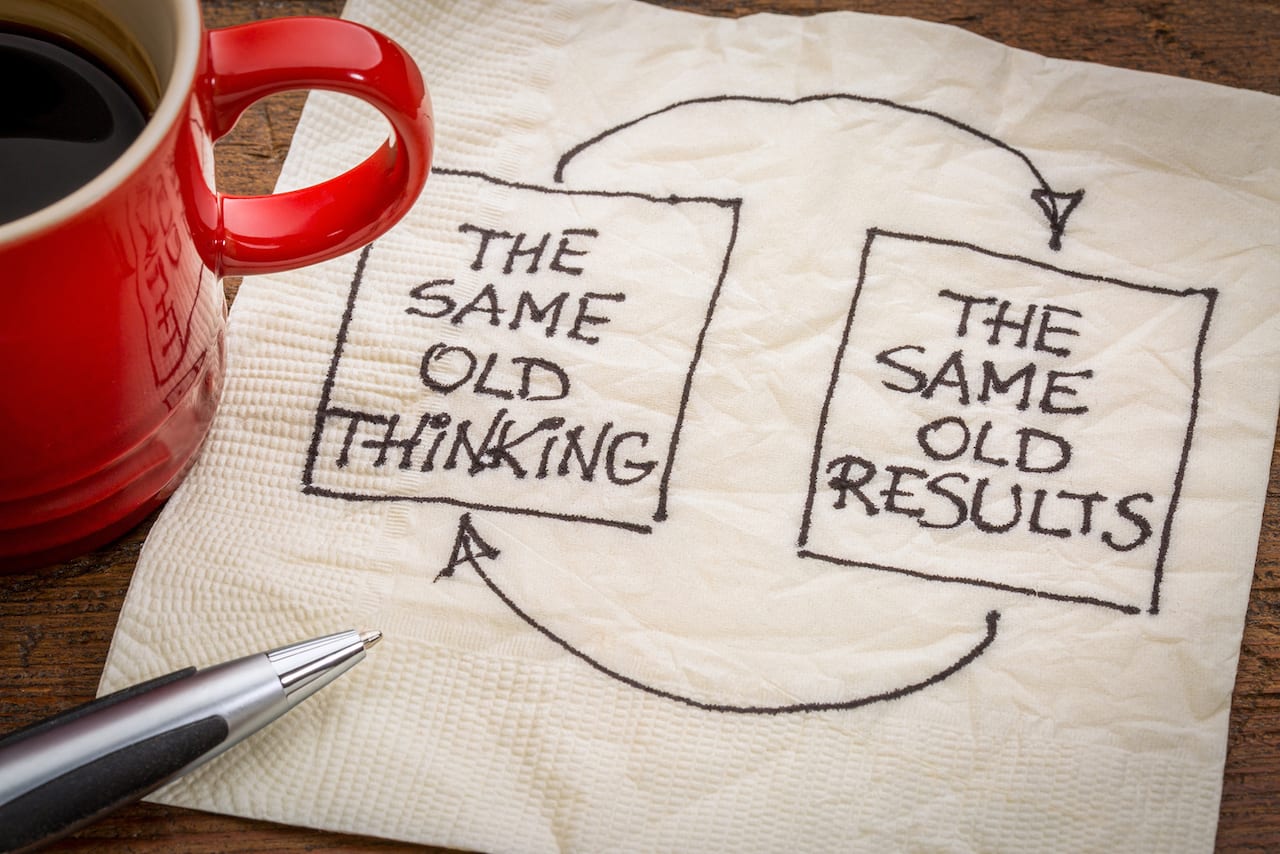
My friend Hendre Coetzee says it this way BE… DO… HAVE… in that order. And in this case that means that we must first enable the salesperson to have a new mindset that gives them a new perspective on what they do and why they do it. If a salesperson comes at the job in the same old way with the same old beliefs they are going to be irrelevant very soon. The internet will see to it. Survival today requires both a mindset shift and a methodology shift. They must both be done and the mindset shift needs to take place first.
I have found that this starts with reframing the thinking about the main objective of the PERSON doing the selling. And it centers around purpose. Higher level purpose than income or revenue. To truly engage people to think differently you have to empower both the mind and the heart. Not surprisingly, the people involved in the selling world are all about heart! We are competitive souls working hard, and when asked why we love what we do, the most common answer is “I like helping people”. Don’t believe me? Ask your team.
So here is my view of how to reframe the thinking about why we “sell” and to start the mindset shift.
As sales people, our objective is to make a DIFFERENCE with the PEOPLE who we serve.
This is where we start. My next blog will cover each key word in that purpose statement and show how this simplifies life and how we then have conversations that matter.
In the beginning there were people who made stuff and people who needed stuff. Then there were the peddlers of stuff who helped the makers and the buyers find each other. The peddlers of stuff were very successful for hundreds of years, because both the makers and the buyers needed them. Stuff was bought and sold and everyone was okay. Then things changed.
Today’s business landscape is rapidly and radically changing and people and organizations are struggling to keep up. Product information was once the golden nugget that every salesperson owned and shared only with those people who they chose to enlighten. The salespeople were once the Kings and Queens of data and information and they reigned supreme. The true product that the salesperson offered up was the information that the client could not easily find. That was then.
Consider this: between the beginning of time and 2003, 5 exabytes of data were created. In 2013, 5 exabytes of data were created each day. In 2014, 90% of the total data and information in the world had been created in the last 2 years. And the prognosis is that the amount of data and information in the world will double every year shortly, and then every 6 months, and on and on. This commoditization of data and information has totally changed the value that a salesperson must deliver today. This rapid change in the creation of information is closely tied to the shifting trends in the nature of work and business. Some futurists estimate that close to 50% of jobs will be extinct in 20 years.
The jobs on the endangered list are not just the obvious ones like travel agents and the milkman. Accountants, air traffic controllers, utility engineers and teachers are all at risk – and so is the sales professional.
The sales professional is on the verge of extinction. Up until now the salesperson was the keeper and deliverer of information, but now they are not really needed for that anymore.
So what do they do?
The good news is that there are clear and valuable answers to that question. In recent months and years there have been a number of sales methodologies presented to bring relevance to the field of selling. The Challenger Sale is the best of those in my opinion. The basic tenets of Teach, Tailor, and Take Control only come from an in-depth understanding of the true value of insight and how best to create and deliver it. Done poorly it is just another substitute for commoditized information. And even in the domain of insight there are key differences that you can make. We will explore those as well as many elements in this journey.
The key difference in the work that Hendre Coetzee and I have done over the last several years shows us that methodology shifts are not sufficient. To stay relevant and avoid obsolescence you will need to make a mindset shift FIRST. Only from there can you properly attack making a shift in what you DO. The specific actions needed to make the shift will be detailed in the book and in the works from Hendre and myself.
Shifting mindset AND methodology is required for completely reversing the erosion of the sales professional’s relevance in a highly commoditized world.

As I find myself studying Edwards Deming more these days, I realize there is an amazing amount of fundamental business wisdom in much of his thinking and many of his quotes. This past week I was reminded of the vital nature of one of his most challenging quotes ever: “It is not necessary to change. Survival is not mandatory.”
I have had numerous discussions about dinosaurs and the desire to not become one. That focus is more critical than ever today, growing daily. Change is what defines us, change is what makes us different today and what will build our future.
I was fortunate to spend a few days with 90 of my peers in the sales world at the recent CEB Chief Sales Officer meeting. I found myself in company of an amazing group of sales leaders from the world’s leading companies. A few of these companies are Staples, FedEx, Penske, Analog Devices, Wells Fargo, John Hancock, Dow, Kemper, Airgas, Siemens Building Technologies, Vision, Jacobs Eng, Interstate Batteries, Georgia Pacific, Intelsat Daimler Trucks, Fluke, Cargill, National Instruments, Bose, Kaiser Permanente, Rockwell, Avery, Smucker, Medline, Honeywell, Herman Miller, Gates, NetJets, Kroll, Avis, Brocade, Fidelity, Gannett, Frost Bank, Comcast and a bunch of others!
These companies represented hundreds of billions of dollars of combined revenues. They come from every industry, from technology to healthcare, banking, oil and gas, materials, building, investment, pharmaceuticals, legal, foods, automotive, and a favorite of mine, J.M. Smucker (they make the best jams and jellies). These companies sell cardboards, advice, gas, pills, jams, oil, batteries, recovery, prevention, million dollar pieces of equipment and products that sell for less than a dollar, like us.
The common denominator that we all shared was that we all came from backgrounds where we sold product features and benefits with a vengeance. We all offered ‘solutions’ that we just knew were exactly what the customers needed. Why? Because that’s what our customers wanted in the past.
The challenge we face today: Our customers no longer want what they did once upon a time.
Most of the folks in attendance were still struggling to really grasp what they needed to do DIFFERENTLY. They had heard, they had read, they even believed, they were just too tied to the past to ACT. They were on a dinosaur path, they knew it and they were very uncertain. Enlightenment is just starting to take hold. It is moving quickly in the ranks of those folks that have the vision to move forward.
Only a handful of companies in the group had reformed their ‘funnel’, or pipeline, into a client perspective of how they make decisions, rather than the old view of what the salesperson needs to do. We made that shift MANY years ago and it has been a key part of our thinking ever since. Mark Sellers of Breakthrough Selling guided us in that critical stage. Helping our clients make better decisions is our focus and it remains the best place to exist.
If you decide that survival is preferable, that relevance is better than turning into a fossil, then change is necessary. Our journey continues to grow and evolve, and it has required shifting both mindset AND methodology.
